
5.9 CCAP Family Composition Examples
ISSUE DATE: 09/2024
The following are examples of determining the Child Care Assistance Program (CCAP) family composition. See Chapter 16.3 (CCAP case examples) to determine how CCAP policies apply to the case examples based on family composition, authorized activities, CCAP subprograms, and authorizing child care.
2-parent married family

Case example
Family composition: Two-parent married family with two children.
CCAP family size: 4
All family members are included in the CCAP family due to meeting the definition of family. See Chapter 5.3 (Determining the CCAP family).
2-parent married blended family

Case example
Family composition: Two parent married family with two children in common and two children not in common.
CCAP family size: 6
All family members are included in the CCAP family due to meeting the definition of family. See Chapter 5.3 (Determining the CCAP family).
2-parent married blended family (1 temporarily absent PRI)
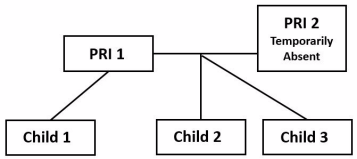
Case example 1
Family composition: Two parent married family with two children in common and one not in common. One parent is temporarily absent and is participating in an authorized activity.
CCAP family size: 5
All family members are included in the CCAP family due to meeting the definition of family. See Chapter 5.3 (Determining the CCAP family).
Case example 2
Family composition: Two parent married family with two children in common and one not in common. One parent has been temporarily absent for more than 60 days, does not have an authorized activity and is not on Extended Eligibility.
CCAP family size: 4
· PRI 1 and the three children are included in the CCAP family due to meeting the definition of family. See Chapter 5.3 (Determining the CCAP family). The parent that has been temporarily absent from the household for longer than 60 days is not included in the CCAP household due to temporary absence policy. See Chapter 5.6 (CCAP Family – Temporary Absence).
2-parent unmarried blended family
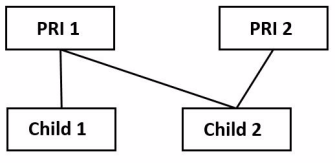
Case Example
Family composition: Two unmarried parents with one child in common and one child not in common.
CCAP family size: 4
The PRIs have a child in common. All family members are included in the CCAP family due to meeting the definition of family. See Chapter 5.3 (Determining the CCAP family).
Eligible relative caregiver, legal guardian, relative custodian, or successor custodian family

Case Example
Family composition: Two-parent household with one child in common and a nephew. PRIs are determined to be eligible relative caregivers for the nephew. PRIs and children with an eligible relative caregiver, legal guardian, relative custodian, or successor custodian relationship meet the definition of family.
CCAP family size: 4
Because the PRIs meet one of the relationship types to both the child in common and the nephew,all family members are included in the CCAP family due to meeting the definition of family. See Chapter 4.1 (Applicant requirements) and Chapter 5.3 (Determining the CCAP family).
Two-parents with one child in common and another child in the household:

Case Example
Family composition: Two-parent household with one child in common and a nephew. PRIs have not been determined to be eligible relative caregivers or legal guardians of the nephew.
CCAP family size: 3
The nephew does not meet the definition of family and is not included in the CCAP family size. See Chapter 5.3 (Determining the CCAP family).
Unmarried parent with a foster child
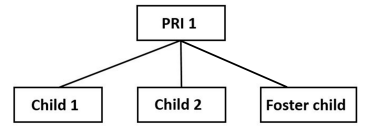
Case Example
Family composition: One parent with two children and one foster child.
CCAP family size: 4
The PRI is a foster parent and meets the definition of applicant. See Chapter 4.1 (Applicant requirements). The foster child meets the definition of family and is included in the CCAP family size. All family members are included in the CCAP family due to meeting the definition of family. See Chapter 4.1 (Applicant requirements) and Chapter 5.3 (Determining the CCAP family).
Minor parent family living with adult parent only adult parent receives CCAP
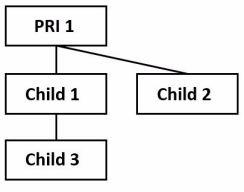
Case Example
Family composition: Adult parent with two minor children. One of the minor children had a baby.
CCAP family size: 3
The minor parent meets the definition of family as a child of the adult parent and can remain in the adult parent’s CCAP family size. The grandchild does not meet the definition of family and is not included in the CCAP family of the adult parent. See Chapter 5.3 (Determining the CCAP family).
Minor parent living with adult parent, both parents receive CCAP

Case Example
In this scenario, the family is split into two separate families for CCAP eligibility.
Family composition 1: Minor parent and minor parent’s child.
CCAP family size: 2
Minor parent in this scenario is a PRI. The CCAP family size only includes the minor parent and minor parent’s child. See Chapter 5.3 (Determining the CCAP family).
Family composition 2: Adult parent and adult parent’s other child.
CCAP family size: 2
The minor parent is no longer included in the adult parent CCAP family size because they are a parent in their own CCAP family. See Chapter 5.3 (Determining the CCAP family).
Unmarried parent living with non-related adult

Case Example 1
Family composition: One parent with three children and a non-related adult reside in the home.
CCAP family size: 4
The non-related adult does not meet the definition of family and is not included in the CCAP family size. See Chapter 5.3 (Determining the CCAP family).
Case Example 2
Family composition: The parent and the non-related adult get married. The composition changes to two married parents with three children.
CCAP family size: 5
The non-related adult becomes a step-parent due to the marriage and now meets the definition of CCAP family and must be included in the CCAP family size. See Chapter 5.3 (Determining the CCAP family).
PRI disqualified due to MFIP fraud
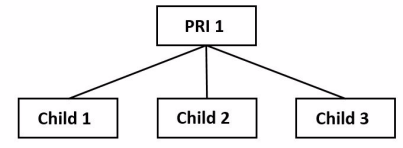
Case Example
Family Composition: One parent with three children. Parent has been disqualified for fraud from MFIP but has not been disqualified from CCAP for fraud.
CCAP Family size: 4
The MFIP fraud disqualification does not impact family composition. The PRI and all children are included in the CCAP family size. See Chapter 5.3 (Determining the CCAP family).
Legal authority
Minnesota Statutes 119B.011, subds. 2 and 13
Minnesota Rules 3400.0020, subps. 12a, 20, 31b, 34b, and 40a
 Report this page